Bathroom Remodel: Common Mistakes to Avoid
- ✓ Serving San Francisco County, San Mateo County, Contra Costa County and 40 more areas

A bathroom remodel can become harder to plan when decisions are made one at a time, without first agreeing on what the room needs to do. A useful first step is to define your priorities, map how you use the space, and make the major choices together before settling on individual finishes.
Starting without a clear brief
A vague goal such as “make the bathroom better” leaves too many questions unanswered. Better storage, easier movement, a different bathing setup, or a new overall look may each lead to different choices. If the household has different priorities, treating them as one shared wish list can also hide disagreements until decisions are already underway.
Write a short brief before comparing products or finishes. Note who uses the room, what feels inconvenient now, what you want to keep, and what you would most like to change. Separate essential needs from preferences. For example, “more practical storage” is a need to explore; a particular cabinet style is one possible way to address it.
Then use the brief to assess each idea: does it answer a stated need, or is it simply attractive on its own? This makes it easier to compare options and gives you a reference point when new possibilities arise.
Choosing finishes before resolving the layout
It is easy to begin with tile, taps, or a striking mirror because those choices are visible and enjoyable to compare. But selecting finishes before settling the room’s arrangement can make the process feel fragmented. You may end up choosing attractive items without knowing whether they support the way you want to use the bathroom.
Start by describing the desired experience of the room. Consider where you need access, what should be within reach, how the room should feel to move through, and which features matter most. Once those priorities are clear, compare finishes and products in the context of the overall plan rather than as isolated purchases.
A simple decision sheet can help: list each major choice, the need it serves, the alternatives you are considering, and any decisions that depend on it. If one choice affects another, record that relationship rather than treating both as independent. The aim is not to make every decision at once; it is to make them in a deliberate order.
Planning storage as an afterthought
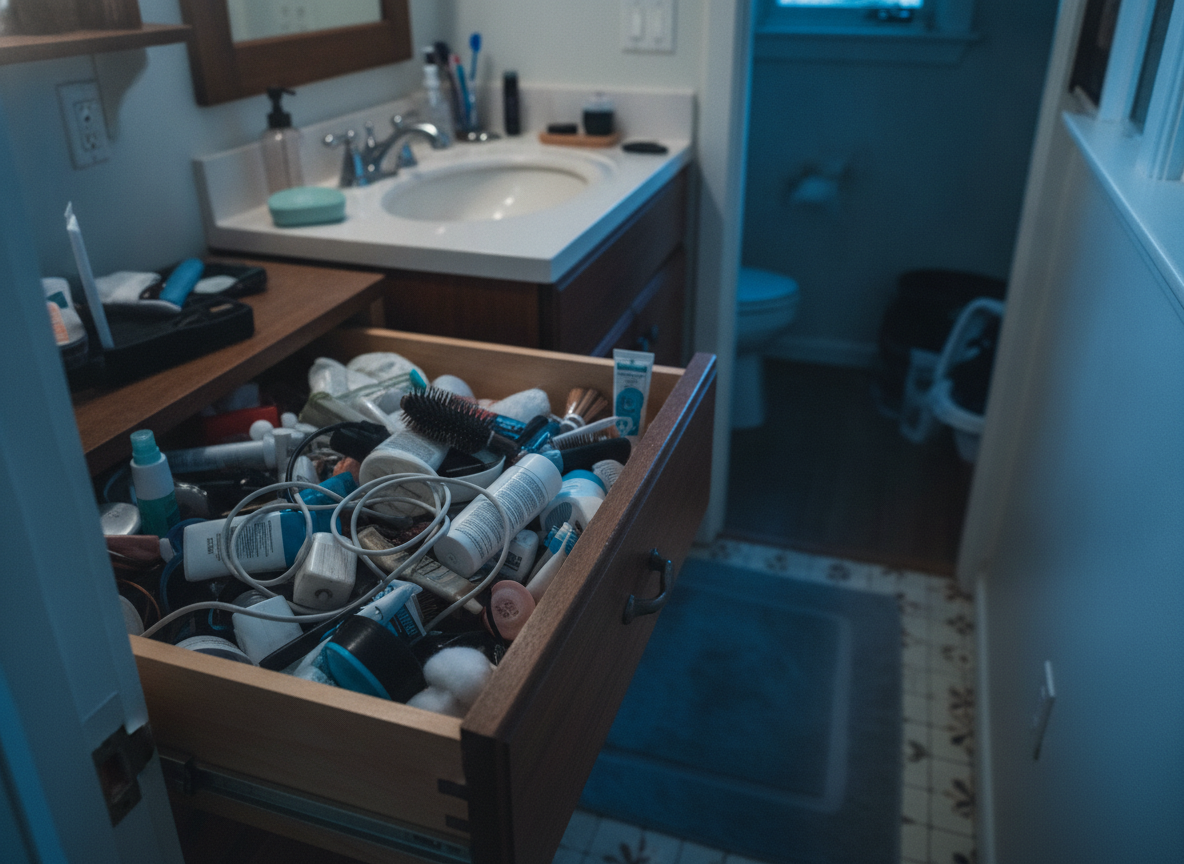
Storage often gets attention only after the larger design choices have been discussed. That can leave everyday items without an obvious place, or make a proposed storage solution difficult to use. Instead of thinking only in terms of cabinet size, consider what you actually need to store and how often you reach for it.
Make an inventory of the items used in the bathroom, including those that need to remain accessible and those that can be stored away. Think about who uses each item and where it would be convenient to keep it. This turns “more storage” into a clearer set of questions: what needs a home, where should it be, and how should it be accessed?
Bring those answers into the layout discussion. A storage idea should work with the room’s circulation and the way the household uses the space, not just fill an available spot. If you are unsure whether a particular solution fits, keep it as an open question to resolve during planning instead of assuming it will work.
Treating the budget as a single number
A budget is more useful when it is connected to specific priorities. If it exists only as one total, it can be difficult to decide what to preserve when options change. Before committing to individual selections, identify what matters most and which preferences could be reconsidered if needed.
Ask for clarity about what a proposed scope includes and how choices affect that scope. Keep a written record of selections and agreed decisions, and revisit that record before making changes. This helps everyone evaluate an adjustment against the original goals rather than making it in isolation.
Avoid assuming that a product’s visible price tells the whole story of a project decision. Ask what is included in the proposal and what remains to be decided. The specific costs and project terms depend on the project, so get those details directly from the business you are considering rather than relying on general examples.
Leaving decisions and questions until work is underway
Unresolved choices can create uncertainty later. Before moving forward, gather the questions that affect the room’s plan, the items you are considering, and the expectations for communication and decisions. Confirm who will answer each question and how any change to the agreed plan will be documented.
A practical next step is to review the brief, layout priorities, storage needs, and open questions together. Ask for a clear explanation of the proposed scope and which choices still need your input. If an answer is unclear, pause to clarify it before treating the related decision as settled.
This is not about anticipating every possible issue. It is about making the important assumptions visible while there is still time to discuss them. A written list of decisions and unanswered questions gives you a more reliable starting point than memory alone.
Frequently asked questions
What should I decide first in a bathroom remodel?
Begin with the room’s purpose and your priorities: who uses it, what is not working for you, and what you want to change. Use those answers to guide layout and product discussions before choosing finishes.
How can I avoid choosing the wrong storage?
List the items you need to store, note which ones should be easy to reach, and consider where each belongs. Compare storage ideas against that list and the room’s overall use.
What should I ask before agreeing to a project scope?
Ask what the proposed scope includes, which decisions remain open, and how changes will be discussed and recorded. Request explanations for points you do not understand before considering them settled.
For help planning a bathroom remodel, contact Barcci Builders at 650-200-3149 or info@barccibuilders.com.
Related articles
Areas we serve
- ● San Francisco County
- ● San Mateo County
- ● Contra Costa County
- ● San Francisco
- ● Atherton
- ● Belmont
- ● Brisbane
- ● Burlingame
- ● Colma
- ● Daly City
- ● East Palo Alto
- ● Foster City
- ● Half Moon Bay
- ● Hillsborough
- ● Menlo Park
- ● Millbrae
- ● Pacifica
- ● Portola Valley
- ● Redwood City
- ● San Bruno
- ● San Carlos
- ● San Mateo
- ● South San Francisco
- ● Woodside
- ● Antioch
- ● Brentwood
- ● Clayton
- ● Concord
- ● Danville
- ● El Cerrito
- ● Hercules
- ● Lafayette
- ● Martinez
- ● Moraga
- ● Oakley
- ● Orinda
- ● Pinole
- ● Pittsburg
- ● Pleasant Hill
- ● Richmond
- ● San Pablo
- ● San Ramon
- ● Walnut Creek