What Should You Notice Before a Kitchen Problem Grows?
- ✓ Serving San Francisco County, San Mateo County, Contra Costa County and 40 more areas

Pay attention to changes in how your kitchen looks and works: a new stain, a cabinet door that no longer sits straight, or a surface that feels different can be worth a closer look. One observation alone does not tell you what is causing a change, so note what you see, where it is, and whether it changes over time.
Look for changes, not just obvious damage
A useful first step is to compare the kitchen as it is now with how you remember it. Check cabinet fronts, drawer openings, counters, flooring, walls, and the areas around the sink and appliances. Look for differences such as a new gap, a visible mark, a lifted edge, a crack, or a change in alignment. These are observations to record—not proof of a particular cause.
Notice whether the change is isolated or appears in more than one place. A small mark on one cabinet front is different from several doors that appear newly uneven. Write down the specific location rather than relying on a general note like “the cabinets look off.” Clear descriptions make it easier to explain what has changed if you decide to ask for help.
Pay attention to how fixtures and storage work
As you use the kitchen, notice whether doors, drawers, and other everyday fixtures behave differently than they used to. Does a drawer feel harder to open? Does a cabinet door seem to catch or leave a different gap when closed? Is a handle loose? Record the item and what happens during ordinary use.
Avoid forcing something that seems stuck or unstable. The goal of an early check is to observe and describe, not to take apart a fixture or make a repair without knowing what is involved. If the same change keeps drawing your attention, add it to your notes and consider whether you want a professional to assess the space.
Keep an eye on surfaces and the areas around water
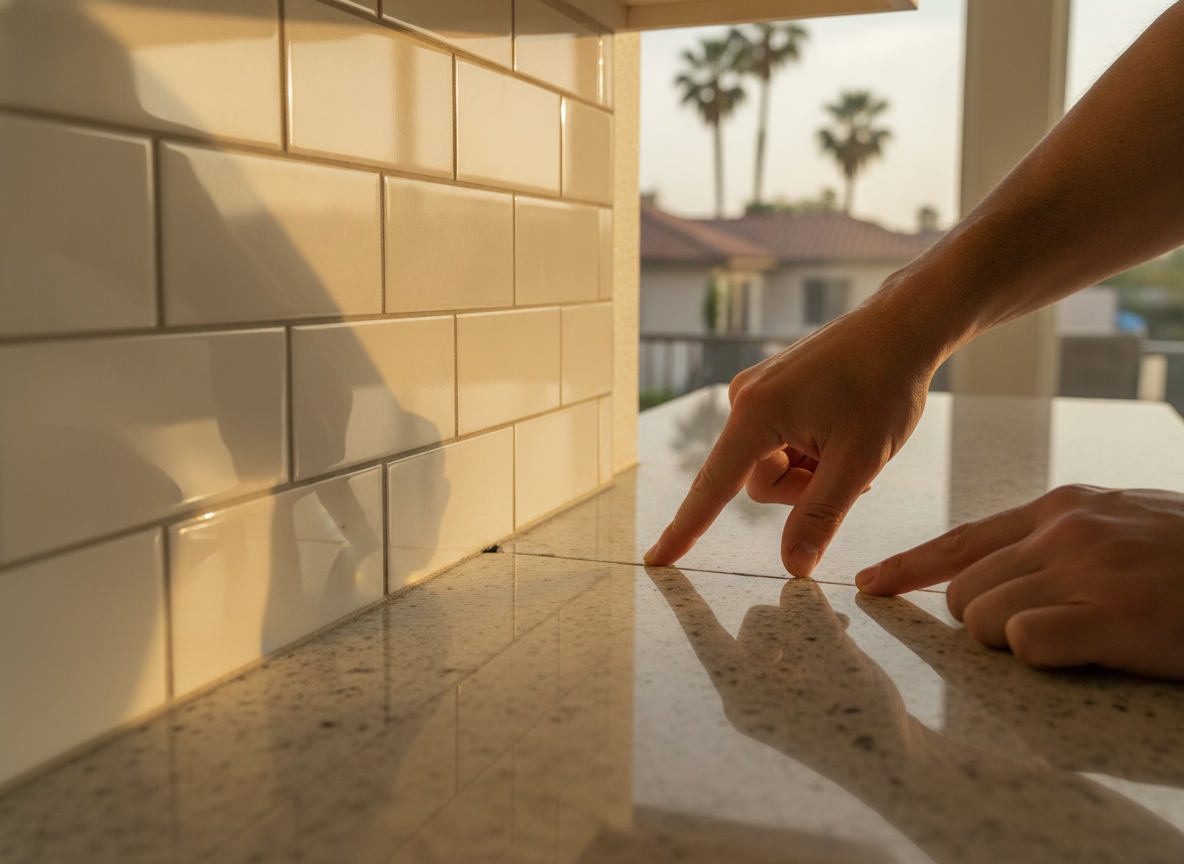
Look over the visible surfaces around the sink, counters, backsplash, and nearby cabinets. Note any new discoloration, swelling, peeling, cracked material, or areas that appear different from the surrounding finish. If you notice moisture, record where and when you saw it, and whether it appears again. Avoid treating a visual clue as a diagnosis; several different explanations may need to be considered by someone assessing the kitchen.
You can also note changes in smell or sounds, but describe them plainly. For example, write down where an odor is noticeable or when a sound occurs. A short, specific record is more useful than guessing at a cause. If you see active water or another condition that seems urgent, seek appropriate professional help rather than waiting for a remodel discussion.
Track whether the change is new or recurring
A dated photo can help you compare what you see from one week to the next. Take it from a similar position when possible, include enough of the surrounding area to show the location, and keep a brief note with the date. For a sound, smell, or change in how a drawer moves, a written description may be more useful than a photo.
Keep the record simple: what changed, where you noticed it, when you first saw it, and whether it has appeared again. Avoid assumptions about what is behind a surface or how extensive a concern may be. Those are questions for an assessment, not something a photograph or first impression can settle on its own.
Decide what you want to address
Not every visible imperfection means you need a kitchen remodel. Start by separating the observations that affect everyday use from those that are mainly about appearance. Note which areas matter most to you, what feels inconvenient, and what you would like the kitchen to do better. This helps turn a collection of concerns into a clear conversation about priorities.
If several changes are present, bring your notes and photos together rather than discussing each one as an unrelated issue. You can explain what you have observed and ask what options may fit your goals. Barcci Builders offers kitchen remodel services; a conversation can help you discuss the kitchen and the changes you are considering without treating an early observation as a confirmed diagnosis.
Frequently asked questions
Is one crack or stain enough to mean I need a remodel?
Not by itself. Record where it is and whether it changes, and avoid assuming the cause from appearance alone. A professional assessment can help you discuss what you are seeing and what options to consider.
What should I bring to a kitchen remodeling conversation?
Bring a short list of the changes you have noticed, when you first noticed them, and any dated photos that help show the location or progression. Include the parts of the kitchen you most want to improve.
Should I wait until a problem gets worse before asking for help?
You do not have to wait to ask questions. If a change concerns you, describe what you have observed and ask about an assessment; seek appropriate professional help promptly if the condition seems urgent.
To discuss a kitchen remodel with Barcci Builders, call 650-200-3149.

Areas we serve
- ● San Francisco County
- ● San Mateo County
- ● Contra Costa County
- ● San Francisco
- ● Atherton
- ● Belmont
- ● Brisbane
- ● Burlingame
- ● Colma
- ● Daly City
- ● East Palo Alto
- ● Foster City
- ● Half Moon Bay
- ● Hillsborough
- ● Menlo Park
- ● Millbrae
- ● Pacifica
- ● Portola Valley
- ● Redwood City
- ● San Bruno
- ● San Carlos
- ● San Mateo
- ● South San Francisco
- ● Woodside
- ● Antioch
- ● Brentwood
- ● Clayton
- ● Concord
- ● Danville
- ● El Cerrito
- ● Hercules
- ● Lafayette
- ● Martinez
- ● Moraga
- ● Oakley
- ● Orinda
- ● Pinole
- ● Pittsburg
- ● Pleasant Hill
- ● Richmond
- ● San Pablo
- ● San Ramon
- ● Walnut Creek