Home additions: a useful checklist
- ✓ Serving San Francisco County, San Mateo County, Contra Costa County and 40 more areas
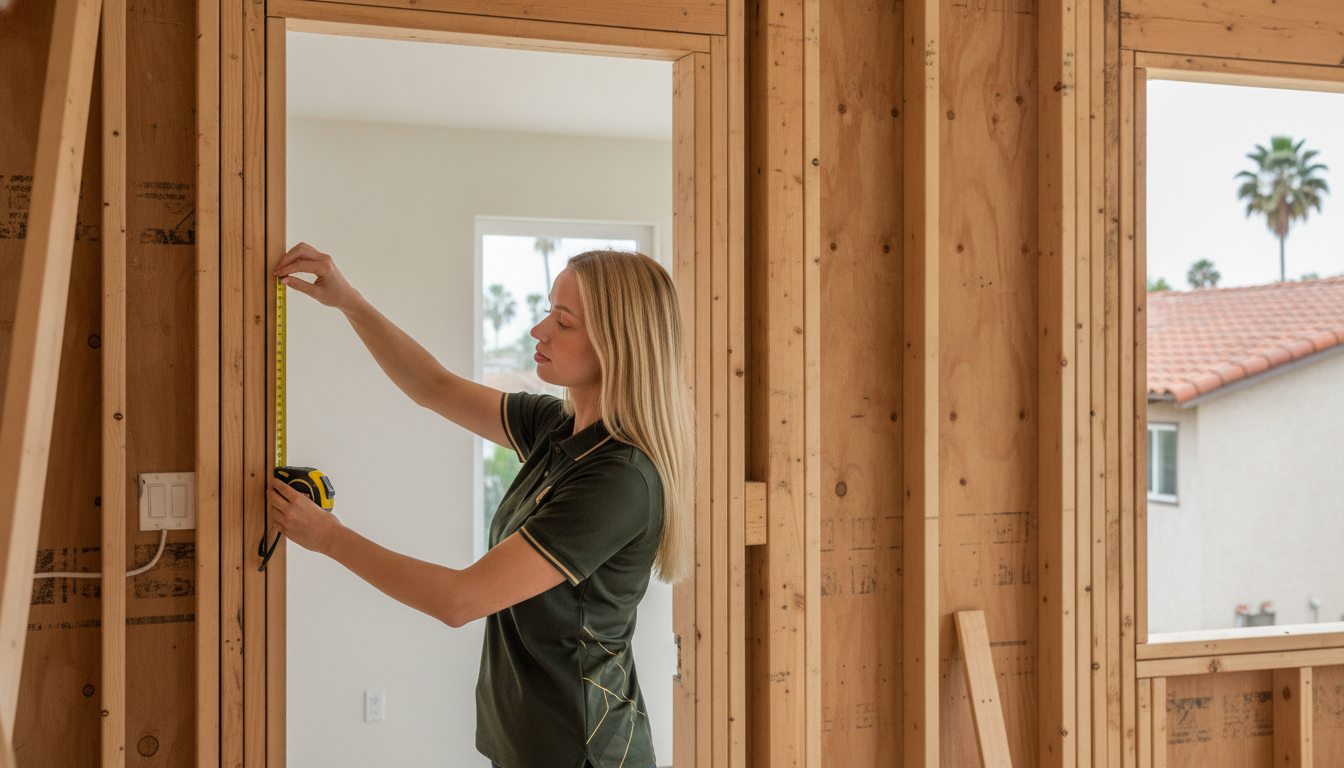
What should you check before moving ahead with a home addition? Start with three practical questions: what the new space needs to do, what the project includes, and how decisions, costs, and responsibilities will be handled. Clear answers give you a stronger basis for comparing proposals and deciding what to do next.
1. Define what the new space needs to do
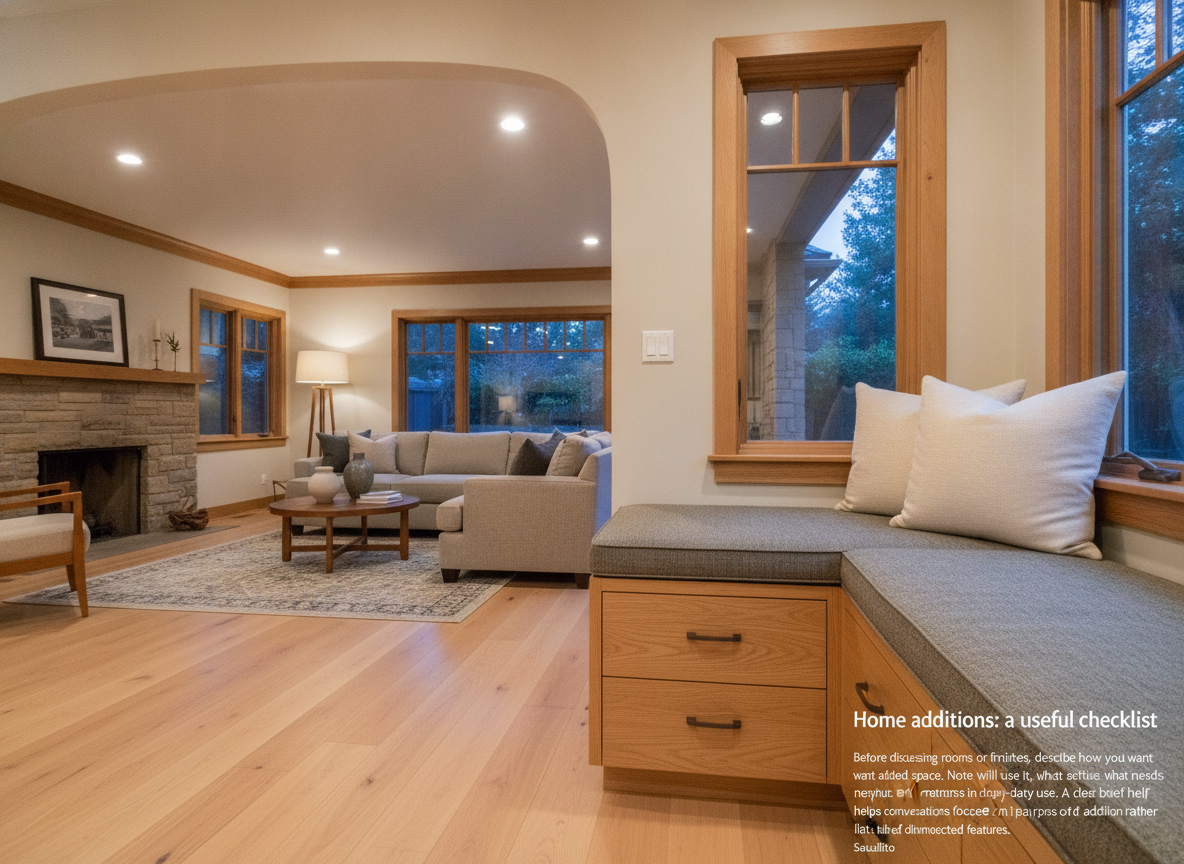
Before discussing rooms or finishes, describe how you want to use the added space. Note who will use it, what activities it needs to support, and what matters most in day-to-day use. A clear brief helps keep conversations focused on the purpose of the addition rather than a list of disconnected features.
- ✓ What will the new space be used for, and who will use it?
- ✓ Which needs are essential, and which are preferences?
- ✓ How should the addition connect to the parts of the home you already use?
- ✓ What concerns or constraints do you want to discuss before settling on a plan?
Bring examples or sketches if they help explain your ideas, but label what is essential versus illustrative. That distinction gives you room to discuss alternatives without losing sight of what the space needs to accomplish.
2. Ask what is included—and what is not
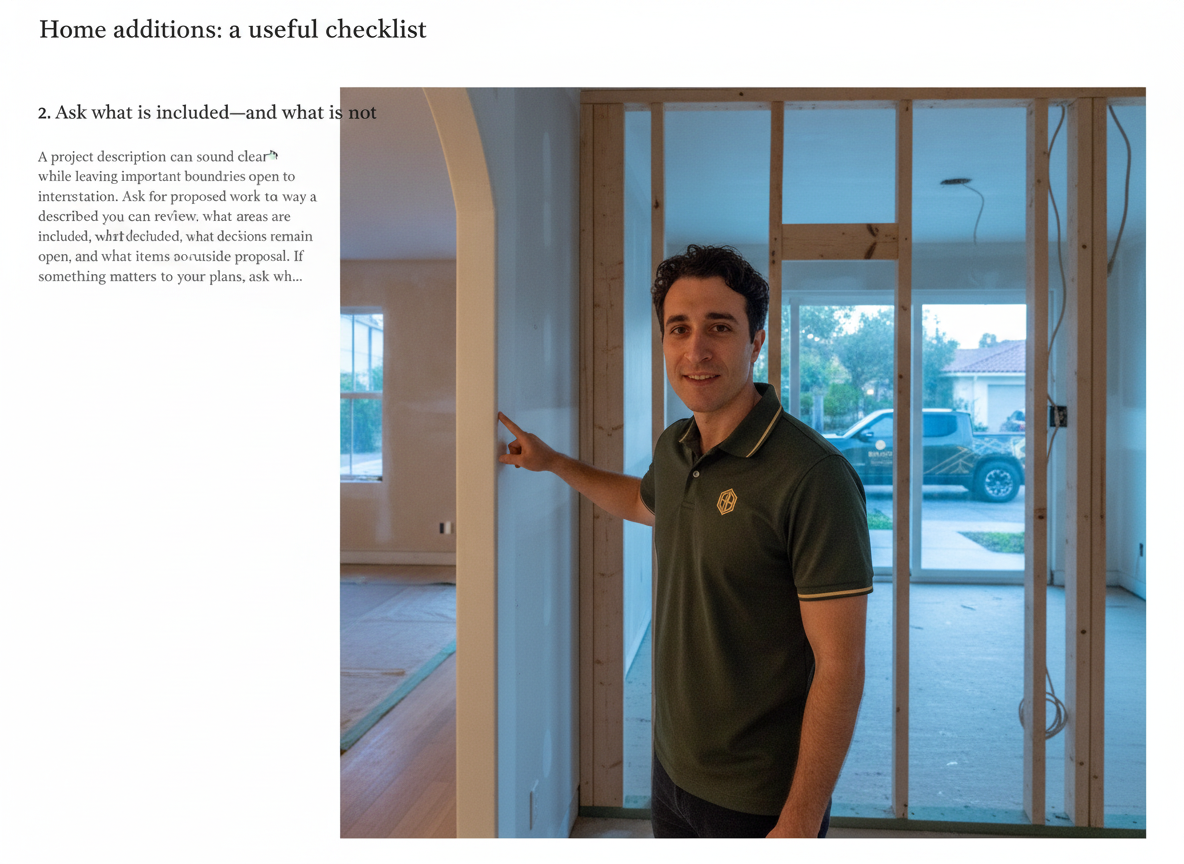
A project description can sound clear while leaving important boundaries open to interpretation. Ask for the proposed work to be described in a way you can review: what areas are included, what decisions remain open, and what items are outside the proposal. If something matters to your plans, ask where it appears in the written scope.
- ✓ Which design and construction tasks are included?
- ✓ What materials, fixtures, or finish choices are specified, and what remains undecided?
- ✓ Are any existing areas or related tasks excluded?
- ✓ How will changes to the agreed scope be discussed and recorded?
Use the answers to identify gaps, not just to compare lists. If two proposals describe different work, ask for clarification before comparing their totals. A written scope that reflects your priorities makes it easier to discuss expectations as the project takes shape.
3. Clarify approvals and project responsibilities
Ask who will identify the approvals or reviews that apply to your specific plans, and who is responsible for coordinating each step. Avoid relying on assumptions based only on the size or appearance of the addition; ask how the requirements for your particular project will be checked.
Also clarify who your main contact will be and how you should raise questions or decisions. Ask what you will be expected to review, when your input will be needed, and how decisions will be documented. Knowing the responsibilities on both sides helps you prepare for the conversations ahead.
4. Discuss budget, schedule, and changes
Ask how the proposed budget is organized and which items could change as details are finalized. Find out what assumptions the estimate depends on, what is not included, and how you will be told if a decision or change affects the cost. Request that any agreed changes be recorded so you can refer back to them.
Ask for the anticipated schedule and the factors it depends on. Rather than focusing only on a target date, ask what the major stages are, what decisions or approvals must happen along the way, and how schedule updates will be communicated. These questions help you understand what is planned and what still needs to be resolved.
5. Compare answers, not just promises
After conversations with prospective builders, write down the answers while they are fresh. Compare how clearly each person explains the scope, open questions, responsibilities, and process for handling changes. If an answer is vague, ask for a specific example of how the issue would be addressed on your project.
Before committing, review the written information against your original brief. Check that your priorities are reflected, unresolved items are identified, and you know how to get answers as the project progresses. You do not need to settle every design choice at the first conversation, but you should understand which decisions remain and how they will be handled.
Frequently asked questions
What should I bring to an initial conversation?
Bring a short description of the space you want, how you plan to use it, your essential priorities, and any questions or concerns. Examples can help explain your preferences, as long as you distinguish inspiration from a fixed requirement.
Should I compare proposals by price alone?
Compare what each proposal says is included, what remains undecided, and how changes and questions will be handled. If the scopes differ or a cost is unclear, ask for clarification before drawing a conclusion.
What should I ask about permits or approvals?
Ask who will determine which approvals apply to your specific plans, who will coordinate them, and how that work is reflected in the project scope and schedule.
For help discussing a home addition, contact Barcci Builders at 650-200-3149 or info@barccibuilders.com.
Areas we serve
- ● San Francisco County
- ● San Mateo County
- ● Contra Costa County
- ● San Francisco
- ● Atherton
- ● Belmont
- ● Brisbane
- ● Burlingame
- ● Colma
- ● Daly City
- ● East Palo Alto
- ● Foster City
- ● Half Moon Bay
- ● Hillsborough
- ● Menlo Park
- ● Millbrae
- ● Pacifica
- ● Portola Valley
- ● Redwood City
- ● San Bruno
- ● San Carlos
- ● San Mateo
- ● South San Francisco
- ● Woodside
- ● Antioch
- ● Brentwood
- ● Clayton
- ● Concord
- ● Danville
- ● El Cerrito
- ● Hercules
- ● Lafayette
- ● Martinez
- ● Moraga
- ● Oakley
- ● Orinda
- ● Pinole
- ● Pittsburg
- ● Pleasant Hill
- ● Richmond
- ● San Pablo
- ● San Ramon
- ● Walnut Creek